EIC Summit 2026: Europe doesn’t lack innovation, it lacks speed
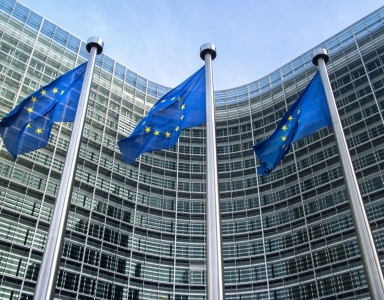
Last week, Hezelburcht attended the EIC Summit 2026 in Brussels. Unlike many events focused on proposal writing or funding opportunities, the Summit brought together a broad mix of policymakers, entrepreneurs, investors, EIC Board members and innovation leaders to discuss a much bigger question: how can Europe strengthen its position as a global innovation powerhouse?
Europe is making progress, but complacency is a risk
Across the many sessions and discussions, one message stood out clearly: Europe is making significant progress. The European Innovation Council (EIC) has evolved into a recognised player within the innovation ecosystem and is increasingly successful in attracting private investment alongside public funding. According to the recently published EIC Impact Report, every euro invested through the EIC attracts an additional € 3.50 from private investors. This demonstrates that the programme is not only supporting breakthrough innovations but is also helping to de-risk opportunities for the wider investment community. At the same time, speakers repeatedly stressed that success should not lead to complacency. Europe still faces structural barriers that slow down innovation and prevent promising companies from scaling as quickly as their counterparts in the United States or Asia.
The challenge is no longer finding innovation
The discussions highlighted that Europe possesses many of the ingredients needed for success. It has world-class universities, strong research organisations, talented entrepreneurs and substantial pools of capital. The real challenge lies elsewhere: getting these resources connected efficiently. Whether the topic was startup support, deep-tech commercialisation, clean technology or venture capital, the same issue kept resurfacing. Europe remains fragmented. Different national regulations, tax systems, investment environments and legal frameworks create friction for companies that want to grow across borders. As European Commissioner for Startups, Research and Innovation Ekaterina Zaharieva noted during the opening session, Europe must not only help companies scale, it must help them scale fast. In rapidly evolving sectors such as artificial intelligence and deep tech, speed increasingly determines success.
Capital is available, but deployment remains difficult
One of the most interesting discussions focused on financing Europe’s future. Contrary to popular belief, several speakers argued that Europe does not necessarily suffer from a lack of capital. Large institutional investors, including pension funds, manage significant financial resources. The problem is that this capital does not always reach innovative companies efficiently.
A fragmented capital market, lengthy decision-making processes and regulatory complexity continue to discourage cross-border investment. While investors in other regions can often make decisions within days, European entrepreneurs frequently face months of discussions and due diligence before funding is secured. The recurring question throughout the Summit was therefore not whether the money exists, but how Europe can move it more effectively towards high-potential innovators.
Towards a truly European innovation ecosystem
Several sessions explored possible solutions. One frequently discussed initiative was EU Inc., a proposed framework designed to simplify company formation and investment across Europe. The ambition is to create a common framework that makes it easier for companies to attract talent, offer employee participation schemes and raise capital across borders without facing a patchwork of national regulations.
The broader objective is clear: entrepreneurs should not feel compelled to relocate simply to access funding, talent or growth opportunities.
Another recurring theme was the importance of collaboration between innovation hubs. Rather than duplicating efforts in every region, speakers advocated stronger connections between centres of excellence, allowing startups and scaleups to access specialised expertise while remaining rooted in their local ecosystems.
EIC Summit 2026: A successful programme that can still improve
The future of the EIC itself was also discussed extensively. Although the programme has achieved impressive results since becoming part of Horizon Europe in 2021, many participants argued that it should become faster, more ambitious and more willing to accept failure. One striking statistic illustrates this point. Of the approximately 370 companies supported through EIC investments, only 27 have gone bankrupt. For a programme explicitly designed to support high-risk, breakthrough innovation, several speakers suggested that this failure rate may actually indicate that more risk could be taken. The message was not that the EIC is underperforming. Quite the opposite. The programme is widely regarded as a success story. However, if Europe wants to compete globally in deep tech and disruptive innovation, continuous improvement remains essential.
Our takeaway
The EIC Summit 2026 was ultimately a remarkably optimistic event. Despite the challenges, there was a strong sense of momentum and urgency. Europe has the knowledge, the talent and increasingly the investment capacity to lead in innovation. The next step is ensuring that these strengths can operate within a more integrated and agile ecosystem. The central question is therefore no longer whether Europe can innovate. The question is whether Europe can organise itself well enough to turn innovation into scale, impact and global competitiveness. And perhaps most importantly: the money is already here. The challenge is getting it to the right place, at the right time.